-
The Adaption Tax May 2025
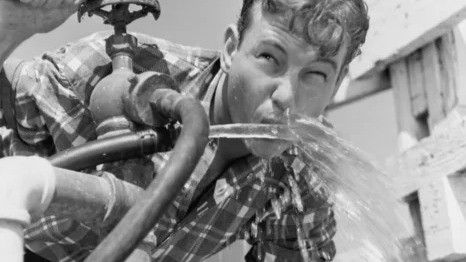
The Hose Drinker: A Customer Archetype Every Innovator Should Know
June 2026, Patricia Roller
At Vidlet, we've coined a term for a type of consumer we encounter regularly in research: The Hose Drinker.
We first met them during a project for Zurn Elkay, the company behind many of the water bottle filling stations found in airports, schools, and public spaces.
When discussing water quality and filtration, some consumers would inevitably say:
"I grew up drinking from a garden hose and I'm still here."
Case closed?
The Hose Drinker's argument is difficult to refute because they possess the most persuasive evidence available: they survived.
Facts about contaminants, aging infrastructure, or water quality reports are no match for decades of personal experience. Their logic is simple:
"Nothing bad happened to me, so why should I worry now?"
Once you start looking for Hose Drinkers, you see them everywhere.
They're the people who hear a new recommendation and respond, "We never worried about that growing up."
They're the consumers who look at a new product and ask, "What's wrong with the old one?"
They're the customers who remain loyal to familiar solutions long after newer alternatives have arrived.
For companies trying to innovate, Hose Drinkers can be frustrating.
You can have better technology, better science, and better data. You can spend years developing a solution that genuinely improves people's lives.
And yet some customers will still respond:
"Maybe. But I've been doing it this way for 40 years."
The important thing is not to dismiss them.
Some of the most loyal and valuable customers are Hose Drinkers. Their skepticism often comes from experience, not ignorance. They've seen trends come and go. They've watched products promise more than they delivered. They've learned that "new" does not always mean "better."
Consumers don't evaluate products based on our roadmap. They evaluate them based on their own experiences.
That's why customer research is often less about asking people what they want and more about understanding why they do what they do.
Better technology matters. But people don't adopt innovations simply because they're objectively better. They adopt them when those innovations solve a problem they personally believe they have.
So what do you do with Hose Drinkers?
First, go beyond facts. Facts and features can influence behavior, but they rarely tell the whole story. To understand a Hose Drinker, you must understand the emotional driver underneath.
Second, understand what they're protecting. Sometimes it's convenience. Sometimes it's trust. Sometimes it's identity. The consumer who says, "I've always done it this way" is often telling you something more important than a simple preference.
Third, recognize that not every customer needs to be converted. Some innovations succeed because they attract new users, not because they persuade every existing one.
And perhaps the most uncomfortable realization is this:
We're all Hose Drinkers about something. Politics. Artificial intelligence. Exercise. Work habits. Relationships.
We all have areas where our primary source of evidence is:
"Well, that's how I've always done it."
The next time you encounter a customer who refuses to embrace your brilliant new idea, don't assume they're irrational. They may simply be a Hose Drinker.
And if we're honest, there's probably a garden hose somewhere in our own backyard too.
There is no universal solution for innovating with Hose Drinkers. Every category, product, and customer is different.
Facts matter. Better technology matters. Trusted experts matter. All of these can influence behavior and, over time, may even change minds.
But facts rarely exist in a vacuum.
The same information can produce very different reactions depending on the experiences, beliefs, and emotions people bring to it. That's why understanding the emotional driver is so important. Is the consumer protecting a habit? A sense of independence? Trust in what has worked before? A part of their identity?
At Vidlet, that's what makes customer research so fascinating. The most valuable insights rarely come from asking consumers what they want. They come from understanding the experiences, beliefs, emotions, and tradeoffs that shape why they think the way they do.
Innovation starts by understanding them—because people are most open to change when new solutions connect with what matters to them.
Have you encountered a Hose Drinker in your business, your customers, or even in yourself?